ALISON STUART NEWS...
Notes from Alison's Typewriter is the place to go for all Alison's news and updates on books... exclusive content, contests and more!
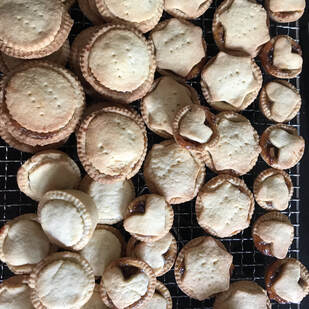
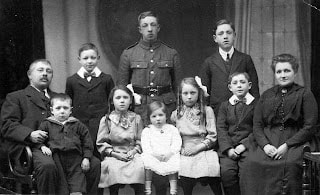
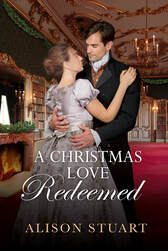
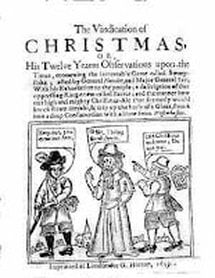
Of all the heinous offences laid at the feet of the puritans during the time of the Interregnum (1649-1660), the banning of Christmas raises the most interest. Oliver Cromwell is generally credited with this decision but the fact is that the abolition of Christmas (or “Christ’s Mass”) as a feast day and holiday predated Cromwell’s rise to power and was the outcome of the puritan domination of Parliament in the 1640s. Christmas had always been celebrated in England with traditions predating Christianity itself eg the “holly and the ivy” goes well back into pagan times. The traditions of wassailing, carols, feasting, mummers, plays and the resultant general drunkenness, frivolity and idleness were not looked on favourably by the puritans who believed that not only was it pagan but also resounded with Roman Catholic undertones. The puritans believed in a pure (hence the name) form of worship and devotion, based on the scriptures and felt that even the reformation had not gone far enough. In 1645, a “Directory of Public Worship” was produced in Westminster to replace the prayer book and in 1647 the parliament passed an ordinance abolishing the feasts of Christmas, Whitsun and Easter. In the 1650s this was taken further with a specific ordinance ordering shops and businesses to remain open on 25th December. Despite the ordinances and the threat of penalties (that included fines and being placed in the stocks) many people continued to covertly celebrate Christmas behind closed doors. For an account of one family’s perilous decision to continue the practice of Christmas, see the diaries of William Winstanley. Winstanley was an Essex farmer who “believed it was the duty of all Christians to celebrate the birth of their Saviour, with joyous festivity and open-handed generosity towards friends, relations and more especially the poor." (Alison Barnes, author of William Winstanley: The Man Who Saved Christmas ). In 1660 the monarchy was restored and the Christmas ban was lifted, although, not surprisingly, after 18 years it took some time for it to return to the familiar carousing and good cheer. As we contemplate the “stress” of Christmas, is there, perhaps a pause for consideration that perhaps the puritans were not all that wrong and that a purer form of worship and remembrance of Christ’s nativity should have a place in modern society? I would love to hear your thoughts… In the meantime I wish you and your family and loved ones a very safe and happy Christmas and holiday period and I join you in wishing peace in 2023! Alison Stuart I am ashamed to admit that I am a little behind in my Christmas baking. Prior to Covid lockdowns, Christmas is pretty much the only time of the year when I do bake (oh the calories!) and I love it because a day spent in the kitchen with the smell of cakes and mince pies wafting through the house, marks a connection with the women of my family back through the ages. With four grandchildren of my own, I now share this joy of family and connection with them... a happy, messy day of turning my tiny kitchen into bedlam to produce gingerbread men and iced biscuits and there is a little part of me that hopes that one day my grandchildren will stand in their own kitchens and experience that joy of food and family connections spanning the generations. My mother’s family came from the border country of Lancashire and Yorkshire (the Pendle witch country) and the women were formidable. According to Grandmother Brown (my great grandmother) if domestic work wasn’t finished by lunchtime then you were an idle housekeeper. My heavens, she’d be turning in the grave to see my standard of housekeeping! Sundays were for the Lord and woe betide my mother if she wore a dress without sleeves or picked up anything other than the “good book” on the Lord’s Day of Rest! And then there was my Aunty Etty (Hetty a dimunitive of Henrietta), one of an overwhelming number of elderly great aunts we routinely met on visits to the UK Aunty Etty enjoyed the reputation of being the best cook in the family and she was, as you can probably imagine, a round, sweet natured old lady.On the last occasion I saw her I had reached the grand old age of twenty one. She looked me up and down and the following conversation ensued. “How old art thou?” “Err, twenty one, Aunty Etty.” “Twenty one! Twenty one and not married! Aren’t there any decent boys in Australia?” This this year I would like to share “Aunty Etty’s mince pies” (which were legendary!). No one quite made them like Aunty Etty, even my Mum! I have to confess to tweaking the recipe slightly, so along with Grandmother Brown, poor Aunty Etty is now probably spinning in her grave at my sacrilege! ENJOY... AUNTY ETTY’S MINCE PIES 8 oz (250gr) plain flour 1 tsp baking powder 4 oz (125gr) sugar 4 oz (125gr) butter I beaten egg ¼ tsp mixed spice 1 tsp lemon rind • Sieve flour and add sugar • Rub in butter until mixture resembles bread crumbs • Make into dough with egg • Wrap in cling film and rest in fridge ½ hr and then turn on to floured board and proceed as for ordinary pastry. • Makes about 12 pies using one jar of fruit mince (of course, Aunty Etty made her own fruit mince!) The Brown family c1914... Aunty Etty is second from the left in the front row. My grandfather, Frank, is standing to the left of his eldest brother Bateman (in uniform) who was killed in Mesopotamia during WW1. When another boy was born after Bateman's death, he was given his elder brother's name. If you are in the mood for some Christmas reading, look for my short regency novella, A CHRISTMAS LOVE REDEEMED. February 1816: Fabien, Comte de Mont Clair, once a highly decorated officer of the exiled Napoleon, cuts a dashing swathe through a London society ball, his eyes only for the glittering ladies of the ‘ton’. His heart jolts at the sight of a woman sitting in a shadowed corner. Not just any woman, but one he would have once given the world for. For Hannah, Lady Trevan, catering to the spoiled darlings of the ton as a humble chaperone is nothing compared to the pain she suffered at the hands of her late husband. Alone and impoverished, she is a person of no consequence but once, a long time ago, she sacrificed her world for the dashing Comte de Mont Clair. Now all she can do is hope that he may glance her way… |
Alison StuartAlison writes historical romances and short stories set in England and Australia and across different periods of history. Archives
October 2024
Categories
All
|