The historical romance writing world is a sadder place this week with the death of historical romance writer, Jo Beverley.
I had the pleasure of meeting Jo at an RWAus conference and, on a visit to Canada, sharing lunch and a tour of the Victoria museum with her (she was a docent).
It is often the chance encounters that shape the direction of your life and if I had never stepped into her workshop at RWAm in 2001, I may have abandoned any pretension to being a writer. Jo gave me permission to be an organic writer (she called Flying Into the Mist) and I will love her forever.
This post is a repost about that workshop and the impact it had on me ... Thank you from the bottom of my heart, Jo!
I had the pleasure of meeting Jo at an RWAus conference and, on a visit to Canada, sharing lunch and a tour of the Victoria museum with her (she was a docent).
It is often the chance encounters that shape the direction of your life and if I had never stepped into her workshop at RWAm in 2001, I may have abandoned any pretension to being a writer. Jo gave me permission to be an organic writer (she called Flying Into the Mist) and I will love her forever.
This post is a repost about that workshop and the impact it had on me ... Thank you from the bottom of my heart, Jo!
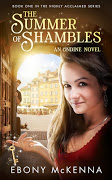
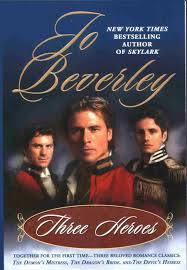 My favourite Jo Beverley... I think I bought it for the cover!
 Maybe it was the atmosphere of the "deep south" which was beginning to affect me, but when the very English Jo Beverley got up to speak at the RWA New Orleans conference in July 2001 it was all I could do not to leap to my feet my hands upraised and cry out "I hear you, sister!".
Conferences are full of workshops on plotting - using story boards, plot arcs, brainstorming – all sorts of wonderful suggestions to aid in pre-plotting a novel. The topic Ms Beverley (multi-published, RWA Honors List, historical writer) was talking on was the art of not plotting your book, or as she calls it, "Flying into the Mist".
It may surprise Jo Beverley fans to know that she does not pre-plot any of her books. For her, writing a novel is an ongoing mystery that unfolds before her when she sits down at her computer and the reason she chose to speak on this topic was to give permission to "flimmers" (and yes I am one of them!) to work this way.
I have been to the conferences, read the books, devoured the articles and in the earnest belief that I must be doing something wrong, I made several concerted attempts at pre-plotting a story. Instead of sailing into stress free writing I found I had got so bored with the story before I even started that I never got around to writing it. All the pleasure of writing had been taken away from me. So you can understand my enthusiasm when this evangelist of the non-plotters told me it was quite acceptable not to pre-plot and that I was not alone!
So what does "Flying into the Mist" mean? In Ms. Beverley's words, it means "that the writer does not pre-plot. No scene outlines, no plan for key scenes and dark moment. Not even a plan for theme or metaphor. These things reveal themselves as the writer writes."
That does not mean that a "flimmer" flies into the mist on autopilot. A good "flimmer" will have something in mind when they start – it may be a character, a setting, a scene or an incident. If you are writing romance you generally know the ending – the hero and heroine will end up together in a happily ever after embrace. How they get there is, for a "flimmer", the excitement!
Of course there are inherent risks in this method of writing and the obvious one is that you can waste an awful lot of time, flying in the wrong direction and then having to back track to put the story back on the right course. However I consider no writing wasted and in that diversion you may discover things about your characters that you can use at another point in time.
One thing I love about "flimming" is that the characters take on life and start to tell me things about themselves. It is almost as if a character will stop in the middle of the action and look at me, arms crossed, with a quizzical expression and the following conversation ensues:
Character: "I wouldn't do that."
Author: "Why not"
Character: "Because you have missed my motivation for acting the way I am. You know I am really looking for my brother."
Author (with surprise): "You have a brother?"
Character (with studied patience). "Yes, I have a brother. He is being held prisoner on an island…"
And so the conversation continues and a whole new character and plot line enters the story.
Jo Beverley overcomes problems with her characters by holding "character interviews", much along the line I have just outlined or she will use "mind mapping". Here a large sheet of paper or a whiteboard is essential. She will put the hero and heroine in circles in the middle of the sheet with some minor characters in smaller circles around them and then using lines map out the relationships between the characters and their problems and motivations.
How does she know that a particular plot line is (or is not) going to work? Jo will give herself three or four chapters into a story before she makes a decision on whether to continue or abort. She may find that the characters need rearranging or that the story is only just starting by Chapter Three .
Once the first draft is done, then Jo will go back with "all the tricks of the plotters trade" which she will use to strengthen the story: Key points, hero's journey, scene and sequel, metaphor and theme will all be used to turn that first draft into yet another best seller.
So why doesn't an experienced writer like Jo Beverley pre-plot her books? Because she feels pre-plotting drags her out of the present. She can have her characters conduct their interactions in a natural way without feeling she has to move them onto the next scene. "If I know what's supposed to happen next or later that distracts me from what's happening in the moment. I might even push the characters to certain words or actions instead of letting them do and say what they truly would."
Flying into the mist is a method of plotting (or non-plotting) that does not suit everyone. Do what feels natural to you, there is no right or wrong way to write your novel and if what you are doing works for you then go with it. Every writer is different.
For those closet-"flimmers", quietly reading your Hearts Talk in the comfort of your living room, I hope, like me, you are leaping from your chair, with your hands in the air shouting "I hear you sister!". Thank you Jo Beverley for giving us permission to "fly into the mist"!
(Quotes taken from "Flying into the Mist" by Jo Beverley - 2001 RWA Annual Conference and reprinted with her permission)
Conferences are full of workshops on plotting - using story boards, plot arcs, brainstorming – all sorts of wonderful suggestions to aid in pre-plotting a novel. The topic Ms Beverley (multi-published, RWA Honors List, historical writer) was talking on was the art of not plotting your book, or as she calls it, "Flying into the Mist".
It may surprise Jo Beverley fans to know that she does not pre-plot any of her books. For her, writing a novel is an ongoing mystery that unfolds before her when she sits down at her computer and the reason she chose to speak on this topic was to give permission to "flimmers" (and yes I am one of them!) to work this way.
I have been to the conferences, read the books, devoured the articles and in the earnest belief that I must be doing something wrong, I made several concerted attempts at pre-plotting a story. Instead of sailing into stress free writing I found I had got so bored with the story before I even started that I never got around to writing it. All the pleasure of writing had been taken away from me. So you can understand my enthusiasm when this evangelist of the non-plotters told me it was quite acceptable not to pre-plot and that I was not alone!
So what does "Flying into the Mist" mean? In Ms. Beverley's words, it means "that the writer does not pre-plot. No scene outlines, no plan for key scenes and dark moment. Not even a plan for theme or metaphor. These things reveal themselves as the writer writes."
That does not mean that a "flimmer" flies into the mist on autopilot. A good "flimmer" will have something in mind when they start – it may be a character, a setting, a scene or an incident. If you are writing romance you generally know the ending – the hero and heroine will end up together in a happily ever after embrace. How they get there is, for a "flimmer", the excitement!
Of course there are inherent risks in this method of writing and the obvious one is that you can waste an awful lot of time, flying in the wrong direction and then having to back track to put the story back on the right course. However I consider no writing wasted and in that diversion you may discover things about your characters that you can use at another point in time.
One thing I love about "flimming" is that the characters take on life and start to tell me things about themselves. It is almost as if a character will stop in the middle of the action and look at me, arms crossed, with a quizzical expression and the following conversation ensues:
Character: "I wouldn't do that."
Author: "Why not"
Character: "Because you have missed my motivation for acting the way I am. You know I am really looking for my brother."
Author (with surprise): "You have a brother?"
Character (with studied patience). "Yes, I have a brother. He is being held prisoner on an island…"
And so the conversation continues and a whole new character and plot line enters the story.
Jo Beverley overcomes problems with her characters by holding "character interviews", much along the line I have just outlined or she will use "mind mapping". Here a large sheet of paper or a whiteboard is essential. She will put the hero and heroine in circles in the middle of the sheet with some minor characters in smaller circles around them and then using lines map out the relationships between the characters and their problems and motivations.
How does she know that a particular plot line is (or is not) going to work? Jo will give herself three or four chapters into a story before she makes a decision on whether to continue or abort. She may find that the characters need rearranging or that the story is only just starting by Chapter Three .
Once the first draft is done, then Jo will go back with "all the tricks of the plotters trade" which she will use to strengthen the story: Key points, hero's journey, scene and sequel, metaphor and theme will all be used to turn that first draft into yet another best seller.
So why doesn't an experienced writer like Jo Beverley pre-plot her books? Because she feels pre-plotting drags her out of the present. She can have her characters conduct their interactions in a natural way without feeling she has to move them onto the next scene. "If I know what's supposed to happen next or later that distracts me from what's happening in the moment. I might even push the characters to certain words or actions instead of letting them do and say what they truly would."
Flying into the mist is a method of plotting (or non-plotting) that does not suit everyone. Do what feels natural to you, there is no right or wrong way to write your novel and if what you are doing works for you then go with it. Every writer is different.
For those closet-"flimmers", quietly reading your Hearts Talk in the comfort of your living room, I hope, like me, you are leaping from your chair, with your hands in the air shouting "I hear you sister!". Thank you Jo Beverley for giving us permission to "fly into the mist"!
(Quotes taken from "Flying into the Mist" by Jo Beverley - 2001 RWA Annual Conference and reprinted with her permission)
Vale Jo Beverley...
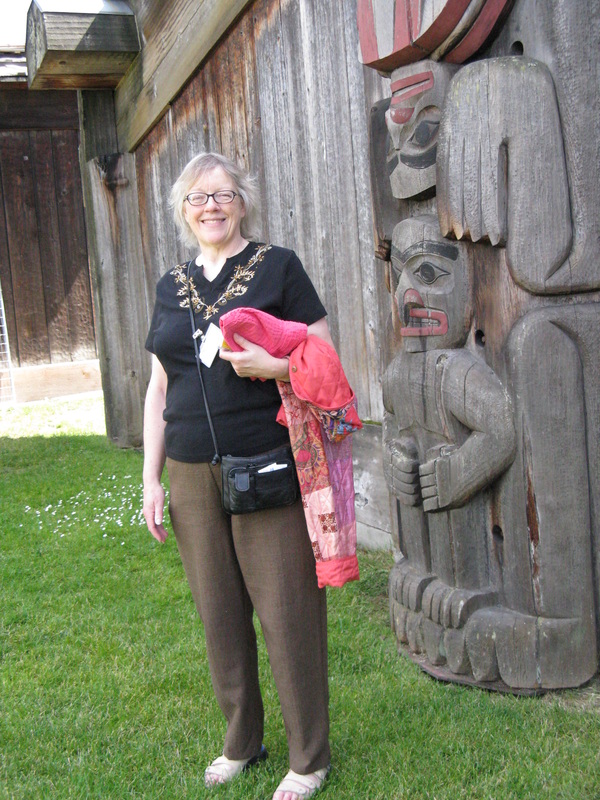
Jo at the museum in Victoria - July 2008

 RSS Feed